
South Africa, Jun 26, 2026
The Microsoft Enterprise Agreement (EA) was the gold standard for corporate licensing for decades, but it was built for a world of predictable and stable on-premises growth.
Microsoft has signaled that it’s pivoting away from the EA model for the mid-market towards a partner-led or CSP (Cloud Solution Provider) model. By moving toward a partner-led Cloud Solution Provider (CSP) model, Microsoft is acknowledging that modern businesses need agility and dynamic scalability, not just a fixed contract.
Microsoft’s CSP announcement and messaging
Microsoft announced in November 2024 that, beginning on the 1st of January 2025, a significant number of its existing cloud EA customers in the direct market would be ineligible to renew their licenses under the current EA agreement framework.
Affected customers were notified in January 2025, and Microsoft recommended either the CSP route for customers who opted for partner-led service, or the MCA (Microsoft Customer Agreement for Enterprise) route, where they deal directly with Microsoft
Microsoft’s intention is for small- to medium-enterprise customers to move to the CSP model and retire their expiring EA agreements. While some organisations are clinging to legacy EA extensions, waiting is a missed opportunity. Forward-thinking organisations are migrating to CSP now to unlock cost optimisations and specialised support that the rigid EA structure simply cannot provide.
What are the EA, CSP, and MCA agreements?
For enterprises seeking to make the transition from EA to CSP, it’s important to understand the differences between the legacy EA model and the new CSP model.
Enterprise Agreement (EA) - Legacy licensing
The Microsoft Enterprise Agreement was traditionally based on an organisation-wide volume licensing contract for organisations of 500+ users. It focused on 3-year contracts with annual payments and annual true-ups and often involved a lot of input from Microsoft and/or LSP. EAs would expire on a fixed term and were generally inflexible.
Situations have emerged where organisations run hybrid environments for Azure and MS365, composed of both EA and CSP. This is common in scenarios where organisations have not committed to consolidating into the CSP model, or the process is still ongoing for legacy systems.
Cloud Solution Provider - Partner-led
The CSP model focuses on partner-managed delivery of cloud licensing and services. Partners (like Logicalis) are responsible for contracting, billing, provisioning, support, and any additional managed services solutions. Partners can also provide integration and managed services, including third-party tooling, if contracted.
Clients deal directly with their CSP partner. Clients are able to control costs and have a variety of flexible term-based commitments (monthly, annual, 3-year), which can be combined to suit their unique requirements through the partner.
Microsoft Customer Agreement (MCA) - Dealing directly with Microsoft
The MCA-E (Microsoft Customer Agreement for Enterprise) model is often chosen by larger enterprise clients who wish to retain a direct relationship with Microsoft. It is a simplified agreement with no expiration date and no threshold for minimum purchases.
Where a customer has entered into an MCA-E, the customer may elect to purchase products from a Microsoft CSP reseller. Purchasing via the CSP reseller does not require acceptance of a new MCA before transacting.
The benefits of CSP vs EA
The hybrid situation in the broader market means that many organisations are using either CSP or EA, or both.
Enterprise Agreement benefits
EAs are long-term commitments (usually 3 years on a fixed term) with fixed pricing. This is beneficial to enterprises with significant on-premises estates with predictable and stable IT requirements.
The benefits of working with a Cloud Solutions Provider(CSP)
- Dynamic Security Governance: A CSP partner provides proactive configuration audits. They ensure your M365 tenant adheres to evolving best practices like MFA enforcement and Conditional Access. This helps to boost the security posture of your organisation.
- Elastic Cost Optimisation: Unlike the rigid "true-up" nature of an EA, a CSP offers monthly granularity. Your partner performs regular "right-sizing" audits to harvest unused licenses and downgrade over-provisioned users, ensuring you only pay for what you actually use.
- End-to-End Lifecycle Success: A CSP bridges the gap between technical deployment and user adoption, providing training and change management to ensure your team actually uses the tools you're paying for.
- Direct-to-Engineer Support: A CSP provides a dedicated support path where engineers already understand your specific environment, tenant configuration, and history. This eliminates the need to go through standard Microsoft 3rd-party support.
How migrating to CSP helps organisations
One of the biggest obstacles to the EA to CSP transition is “migration anxiety”. Organisations are often concerned that changing their licensing agreement results in a breakdown of their Outlook or even their Azure instances.
It is important to remember that the transition is administrative, not technical. The EA to CSP migration occurs at the tenant level, and no data moves, no users are logged out and no passwords are changed.
Beyond a smooth transition, this move allows organisations to leverage Microsoft's AI offerings, such as Copilot. While an EA locks you into a rigid 3-year seat count, the CSP model provides the monthly agility required to pilot Microsoft Copilot and Azure AI services.
It allows you to scale your AI investment in real-time, ensuring you only pay for high-value tools as your team adopts them, rather than being stuck with "shelfware" for three years.
What comes next?
Is your enterprise agreement expiring soon, or are you currently managing a hybrid mix of EA and CSP?
Let Logicalis work with your team to prepare a clear roadmap to transition your business from EA to a modern, flexible Microsoft products and services agreement with CSP (MCA).
Related Insights
South Africa , Sep 4, 2026
What is a Security Operations Centre?
A Security Operations Centre (SOC) is a dedicated team of cybersecurity specialists (in-house or outsourced) that continuously monitors an organisation’s IT environment to detect, investigate, and respond to cybersecurity threats in real time, 24/7. It combines threat intelligence, analysis, and security technology to reduce the time between when a threat is detected and responded to.
South Africa , Sep 4, 2026
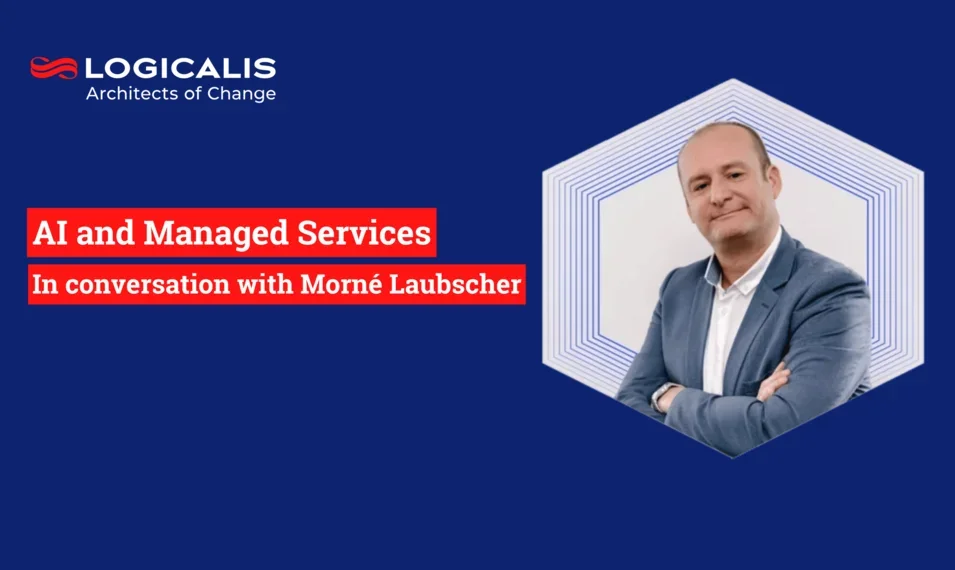
AI and Managed Services
The rapid advancement of AI has major implications for the future of managed services. We spoke to Morne Laubscher, CTO of Logicalis South Africa, about where he sees major changes coming for managed services.
South Africa , Jul 23, 2026
Harnessing AI in the Energy Sector
AI is rapidly transforming the energy sector, but while organisations are increasing investment to drive efficiency, sustainability, and growth, many face significant challenges in scaling AI securely, responsibly, and effectively across the business.
South Africa , Jul 23, 2026
Harnessing AI in the Manufacturing Industry
Manufacturers are rapidly accelerating AI adoption to improve efficiency, decision-making, and innovation, but achieving scalable, secure, and sustainable outcomes requires stronger governance, operational readiness, and risk management.
South Africa , Jul 20, 2026
Harnessing AI in the Financial Services Industry
AI is rapidly reshaping financial services, creating significant opportunities for innovation, efficiency, and customer experience, but organisations must overcome challenges around scale, governance, security, and trust to realise its full value.
South Africa , Jul 7, 2026
Microsoft E7 Explained: Security, AI, and Compliance in One License
See why, despite the higher price point, E7 may actually deliver better value and better economics.
South Africa , Jul 2, 2026
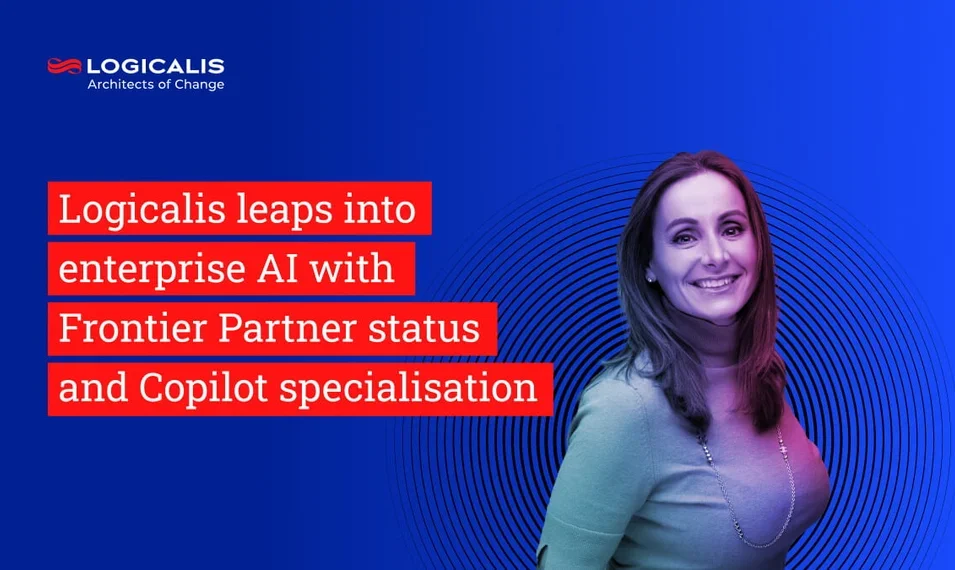
Logicalis leaps into enterprise AI with Frontier Partner status and Copilot specialisation
Read how Logicalis’ Microsoft Frontier Partner status and 12 Advanced Specialisations helps securely scale AI and turn ambition into measurable business impact.
South Africa , Jul 2, 2026
What is Microsoft Frontier Partner status?
Discover how Logicalis’ global Microsoft Frontier Partner recognition empowers you to accelerate scalable, enterprise-wide AI transformation with proven results.
South Africa , Jul 1, 2026
Press Release
Logicalis achieves Microsoft Frontier Partner status to accelerate enterprise AI adoption
New Microsoft Frontier Partner status and Copilot specialisation strengthen Logicalis' ability to help organisations move from AI experimentation to secure, governed enterprise-scale adoption
South Africa , Jun 29, 2026
Penetration testing isn’t the end goal. Proactively reducing exposure is.
Read how modern CISOs are shifting penetration testing from a one‑off audit exercise to a continuous, risk‑driven vulnerability management process that ensures issues are prioritised, fixed, and proven closed.
South Africa , Jun 16, 2026
Penetration testing in 2026: 10 shifts security leaders need to know
Read why penetration testing is evolving from a periodic, report-led exercise into a continuous, platform-driven capability that provides real-time visibility, risk-based prioritisation, and ongoing remediation to reduce cyber exposure.
South Africa , May 18, 2026
Securing Agentic AI: Why Data Governance is the New Perimeter
CIOs are being asked to scale AI without losing control of security, compliance, or cost. The goal is to let it move fast inside clear guardrails. That's where data governance comes in: it's the control plane that decides what an agent can see, what it can do, and what it can change.
South Africa , May 8, 2026
Data in motion, security by design: Architecting for the intelligence era
The Intelligence Era demands more than isolated technology decisions. Read how Logicalis and Cisco help organisations build the right ecosystem to scale AI securely, transforming complex infrastructure into a platform for growth.
South Africa , Feb 23, 2026
Why humans are still the weakest link in your organisation's cyber defence
Attackers don’t break in: they log in. Our latest global research from IDC reveals why human identities are the weakest link behind every major ransomware entry point.
South Africa , Feb 17, 2026
Q&A with Mike Fry: Tackling the Cybersecurity Skills Gap
To accompany the release of the recent IDC infographic “From Shortage to Strength: Fixing the Cyber Skills Gap,” we sat down with Mike Fry, Infrastructure, Data and Security Solutions Director at Logicalis UK&I, to get his view on the findings and what they mean for organisations today.
South Africa , Jan 21, 2026
From shortage to strength: Fixing the cyber skills gap
Discover why the cybersecurity skills gap is putting businesses at risk and how managed security services can bridge the shortage. Learn strategies to boost resilience, reduce costs, and stay ahead of AI-driven threats.
South Africa , Dec 8, 2025
Threat Hunters: The front-line defenders in a modern SOC
Unseen guardians in the battle against cyber threats! Cybersecurity has evolved beyond simply deploying firewalls and antivirus software; it has become a dynamic battle of wits, skill, and foresight.
Australia , Dec 1, 2025
IT Infrastructure As A Service (IaaS): Why Enterprises Are Making The Shift
Enterprises today face growing pressure to innovate faster, scale operations and deliver more value while managing costs. Traditional on-premises systems often hold them back, creating challenges around maintenance, hardware limitations and long deployment cycles.
South Africa , Nov 7, 2025
Digital Transformation and digitalisation fatigue - The implications for organisations
Digital transformation remains a hot topic in contemporary IT strategies and discussions. However, if digital transformation is not carefully managed with well-planned execution and processes, then there can be serious implications for businesses’ digitalisation efforts.
South Africa , Oct 28, 2025
The power of Responsible Business
In today’s world, the ESG expectations placed on businesses have never been higher. Customers, partners, investors, and employees are all looking for organisations that not only deliver results but do so with integrity, transparency, and a genuine commitment to making a positive impact. This is where a Responsible Business department comes in – and why its role is more critical than ever.
South Africa , Oct 22, 2025
Future-proofing your network: The case for NaaS in enterprise digital transformation
Today’s most successful enterprises are defined by their agility and ability to scale. Networking-as-a-Service (NaaS) is a revolutionary business model that allows organisations to transform their network from a rigid, CapEx-heavy asset into a flexible, OpEx-driven service through a trusted managed services provider.
Australia , Oct 15, 2025
AI-driven IT Operations
The world of IT has changed. Are you still running a reactive organisation, spending more time fighting fires than driving innovation? In today's exponentially complex digital environments, traditional IT management can no longer keep pace with the speed of digital transformation. The good news? You don't have to go it alone.
South Africa , Sep 17, 2025
Operationalising Zero Trust - The role of MXDR
Operationalising a Zero Trust Architecture requires a range of tools, systems, and cybersecurity skills. MXDR (Managed Extended Detection and Response) is one of the most effective solutions for implementing an effective Zero Trust Architecture within an organisation.

Australia , Sep 11, 2025
How AI & Automation Are Transforming IT Operations
With the digital revolution fully transforming businesses, IT teams are under immense pressure to keep systems running smoothly, securely and efficiently. Enter AI in IT operations and IT process automation, technologies that are revolutionising the way organisations manage their IT landscapes. In this blog post, we’ll explore the current challenges IT teams face and how AI and automation are reshaping the future of IT operations.

South Africa , Sep 3, 2025
Microsoft Billing - Frequently Asked Questions
Microsoft provides many leading IT solutions for enterprise and small businesses. Many organisations build their services upon the solid foundation of Microsoft products, but often the billing for all the various solutions and products can become confusing. We’ve compiled a list of the most common questions, misconceptions, and answers regarding Microsoft billing.
South Africa , Aug 19, 2025
The Strategic Value of Data Loss Prevention (DLP)
DLP is a strategic imperative for organisations seeking to prevent data leakage, ensure regulatory compliance, and safeguard their reputation.
South Africa , Aug 15, 2025
The Engine for Business Growth: Embracing Innovation and Technology
Logicalis CEO, Bob Bailkoski unpacks the key insights from this year’s CIO Report, offering actionable strategies for success.
South Africa , Aug 15, 2025
The Data Dilemma of Sustainability: Why Measuring Impact Isn’t Just a Numbers Game
As organisations strive for net zero, the challenge isn’t just measuring impact—it’s capturing the full story of sustainability, including effects on ecosystems and communities.
South Africa , Aug 15, 2025
Simplifying Cybersecurity: A Strategic Imperative for the Digital Age
As cyber threats grow, organisations add more tools—yet this complexity itself has become a major security risk. Artur Martins, CISO Logicalis, highlights how CIOs can develop simpler, modern security strategies
South Africa , Jul 17, 2025
What is an IT Systems Integrator?
Learn what a systems integrator is, their role in the ICT value chain, and how your business can benefit from their expertise. Understand key functions, common misconceptions, and why partnering with a SI adds value.
South Africa , Jun 18, 2025
Inside the World of Managed Security Services: An Interview with James Hampson
To uncover the inner workings of cybersecurity and the services offered by Logicalis, we spoke with James Hampson, Managed Security Services Director. His insights into the Security Operations Center (SOC) reveal the complexities, challenges, and triumphs of safeguarding customer environments.
South Africa , Jun 2, 2025
The Value of Human Teams in a SOC: Enhancing Security Operations
Why technology alone isn't enough to safeguard your organisation - the importance of the human element in a security operations centre (SOC) and why it can't be underestimated. Article by Artur Martins, CSIO Logicalis Portugal.
South Africa , May 27, 2025
How Managed XDR provides CIOs with confidence in their Cybersecurity coverage
Rob Mattlin, Head of Global Solutions, Logicalis, explores how Managed Extended Detection and Response (MXDR) equips CIOs with the visibility, control, and expert support needed to strengthen cybersecurity posture and reduce risk across the enterprise.
South Africa , Apr 16, 2025
Microsoft DMARC requirements – What it means and how it impacts Outlook.com users
On 5 May 2025 , Microsoft will be joining Yahoo and Google in mandating compliance with DMARC standards for large volume email senders (domains sending more than 5000 emails per day). This will apply to outlook.com, hotmail.com and live.com.
South Africa , Apr 2, 2025
What are the benefits of Extended Detection and Response (XDR)?
Extended Detection and Response, or XDR, is a powerful security solution that uses a unified security platform empowered by AI and automation. It helps to detect advanced cybersecurity threats and allows organisations to respond quickly.
South Africa , Mar 5, 2025
The partnership between a Security Operations Centre (SOC) and the CISO
As the threat landscape continues to grow in scope and severity, companies are looking more and more towards the vital partnerships required to keep their security posture strong. The partnership and collaboration between the Security Operations Centre (SOC) and the chief information security officer (CISO) is arguably one of the most important relationships in cybersecurity.
South Africa , Jan 7, 2025
Future Face of Tech Leadership: Mastering the ‘Trifecta of Disruption’
"Disruption is redefining tech leadership, with regulation emerging as a critical new force," according to Logicalis CEO Robert Bailkoski.
South Africa , Nov 7, 2024
In the news, Blog
Logicalis renews Microsoft Global Azure Expert MSP status
Logicalis are proud to announce they have renewed the prestigious Global Azure Expert Managed Service Provider (AEMSP) certification, validating the highest possible standard of managed cloud services.
Global , Nov 5, 2024
Blog
Circular logic: Why IT leaders need to embrace circularity for sustainable IT
Discover how embracing Circular IT can transform your IT department into a sustainability powerhouse. This article explores the top 5 ways IT leaders can deliver on sustainability goals.
South Africa , Aug 29, 2024
Windows 10 to 11 - What you need to know
Windows 10 is reaching its End-of-Life (EOL) and the move towards Windows 11 is inevitable for businesses who want to stay updated and secure. After 14 October 2025, all feature updates, patches, security updates and official support for Windows 10 will end.
South Africa , Aug 27, 2024
Good AI. Bad AI.
Discover how AI-driven security solutions analyse network activity, detect anomalies, and predict potential exploits. Protect your business from emerging threats with our advanced AI technology.
South Africa , Aug 15, 2024
Blog
Logicalis scales to new heights with Microsoft in FY24
With awards season behind us and an outstanding year of growth, customer outcomes and new capabilities, Logicalis, has received significant recognition for our outstanding partnership with Microsoft in FY24.
Global , Aug 6, 2024
Blog
How can C-level leaders unlock enterprise value through Sustainability?
Read how CEOs and other top executives can champion sustainable practices, to inspire the entire company to prioritise responsibility and innovation. Join our LinkedIn live - Increasing Enterprise Value through Sustainability - on Wednesday 11th September 2024.
South Africa , Jul 23, 2024
What is a data-driven organisation?
Describing an organisation as data-driven or urging businesses to become data-driven is a popular topic in ICT. As the business environment becomes more reliant on actionable data and informed decisions based on that data; we can expect references to being data-driven to increase.
South Africa , Jul 9, 2024
How to implement a cybersecurity strategy
In our latest CIO report, a staggering 83% of CIOs reported experiencing a cyber hack in the last year and almost all of those surveyed experienced business damage as a consequence. The need for an effective cybersecurity strategy security is clear. But how do you implement a cyber security strategy?
South Africa , Jun 25, 2024
Cloud vs on-premises data storage solutions
Businesses of all sizes rely on data storage solutions to manage the ever-growing data volumes associated with modern business operations. Several options are available, including cloud, hybrid and traditional on-premises data storage.
Global , Mar 26, 2024
Press Release
Logicalis elevates global security portfolio with Microsoft verified Managed XDR Partner Status
Logicalis joins an elite group of managed service providers certified to deliver Microsoft’s most advanced managed detection and response services worldwide
The cybersecurity threats of remote work
Remote work was introduced during the COVID-19 pandemic and has since become a regular feature of the modern workplace. As with all new developments in business, there are advantages, but also risks associated with remote work. Companies have seen new cybersecurity threats entering the threat landscape as employees began working offsite.
South Africa , Jan 30, 2024
What is sustainability in IT?
Sustainability is an important topic in modern business as customers and other stakeholders increasingly measure their service providers’ performance against environmental and ethical standards. This directly impacts the IT industry as many clients will consciously choose to do business with companies that perform better on environmental metrics.
South Africa , Jan 24, 2024
How to develop an IT communications strategy
A strong and reliable IT communications strategy is required to get maximum buy-in from all stakeholders in the IT value chain. Developing your IT communications strategy is an involved process that follows multiple steps.
South Africa , Dec 8, 2023
What are the benefits of a Security Operations Centre (SOC)?
Security operations centres (SOCs) offer many benefits to companies, either as an internal resource, or as a managed security services solution. A good SOC service can prevent a wide range of cyber threats from becoming disastrous events that can affect a company for years.
South Africa , Oct 24, 2023
Choosing the right Microsoft MSSP - 5 Credentials that matter
In an increasingly interconnected world, the frequency and complexity of cybersecurity threats are rising. Our 2025 CIO survey shows that over half of respondents plan to increase their risk management investment. They also consider malware and ransomware significant risks that their organisations will face in the coming year.

South Africa , Sep 26, 2023
10 benefits of IT managed services for South African businesses
There are many benefits to IT managed services that can help upscale the performance of your IT tools and services.